






A good pre-workout should complement your training, not control it.
While caffeinated formulas are popular for their energizing effect, they are not automatically the best choice for every workout or every athlete. Your training time, caffeine tolerance, goals and sleep schedule all matter.
Here is how to choose more intentionally.
What does a pre-workout actually do?
“Pre-workout” describes a category of supplements rather than one universal formula. Ingredients vary from product to product, but formulas are generally designed to support one or more of the following:
- Energy and alertness
- Focus
- Muscular endurance
- Exercise performance
- Blood flow and the feeling commonly known as a muscle “pump”
Some pre-workouts contain stimulants such as caffeine. Others focus on non-stimulant ingredients. Always read the complete product label to understand what a particular formula contains and how it should be used.
When a caffeinated pre-workout may make sense
Caffeine can increase alertness and reduce the perception of effort for some people. Research also suggests that it can improve certain aspects of exercise performance, although the response varies from person to person.
A caffeinated pre-workout may suit you if:
- You train in the morning or early afternoon
- You tolerate caffeine comfortably
- You want added energy for a demanding session
- You are not already consuming large amounts from other sources
More caffeine is not necessarily more effective. A dose that leaves you shaky, anxious or unable to sleep is unlikely to support your routine over the long term.
Start with the serving recommended on the label, never with an extra scoop, and assess your response.
Why training time matters
Sleep is one of the most important parts of recovery. It supports physical and mental readiness for your next session, which means a late caffeine boost can sometimes work against the workout it was intended to improve.
One controlled study found that a substantial dose of caffeine consumed even six hours before bedtime could disrupt sleep. The exact cutoff will differ depending on individual sensitivity, but the lesson is simple: consider the clock, not only the workout.
If you train in the evening, are sensitive to caffeine or already drink coffee during the day, a non-stimulant formula may be a better match.
What is a non-stimulant pre-workout?
A non-stimulant pre-workout is designed to support training without relying on caffeine for its primary effect. Depending on the formula, it may focus on ingredients associated with blood flow, muscular endurance or amino-acid support.
This type of product can be useful for:
- Evening workouts
- People who prefer to limit caffeine
- Athletes who already consume caffeine elsewhere
- Sessions where a muscle pump is the priority
- People who dislike the restless feeling stimulants can cause
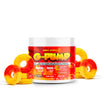
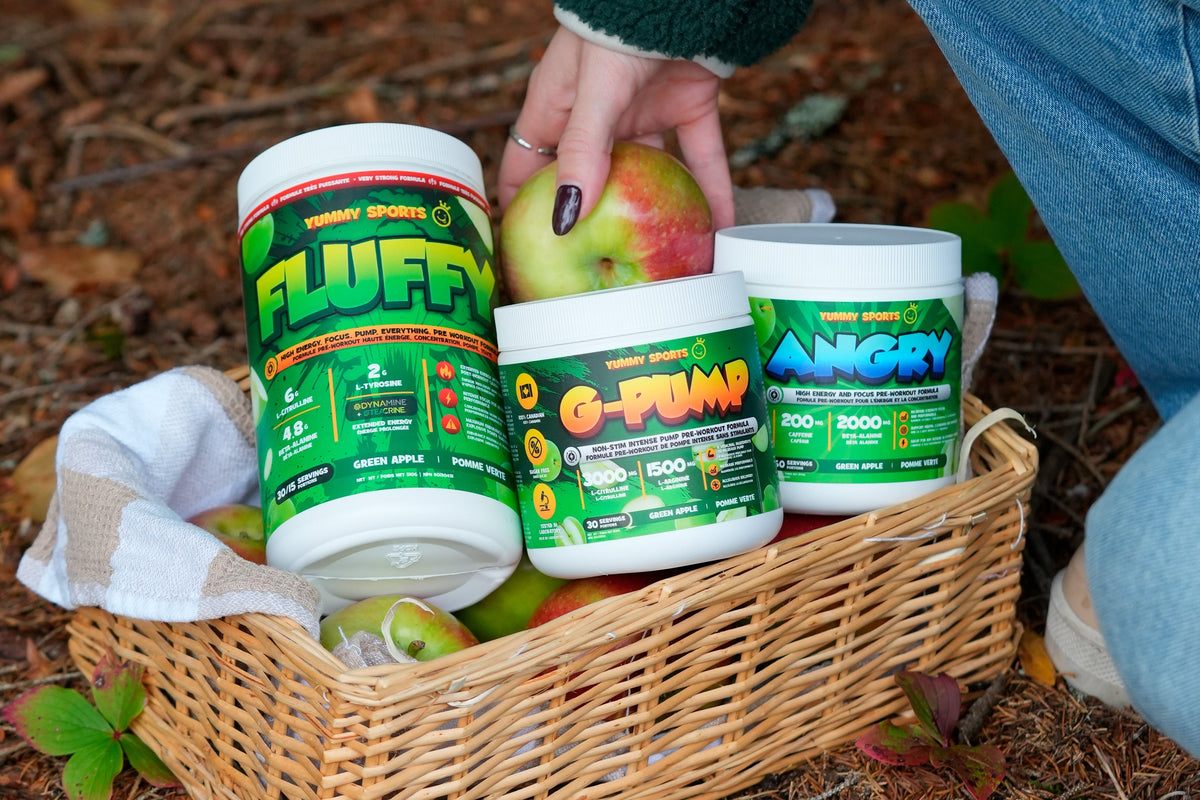
Yummy Sports G-Pump, for example, is positioned as a non-stimulant pre-workout for people looking to support their pump and physical performance. As with any supplement, follow the serving directions and cautions on the container.
Avoid “stacking” caffeine without realizing it
Your pre-workout is only one part of your daily caffeine total. Coffee, tea, energy drinks, caffeinated hydration products and some focus supplements can all add to it.
Health Canada recommends that adults consume no more than 400 mg of caffeine per day, with lower limits in certain circumstances. This is a maximum, not a daily target, and some people experience unwanted effects at much lower amounts.
Before using a caffeinated pre-workout, ask yourself:
- How much caffeine have I already consumed today?
- Does another supplement in my routine contain caffeine?
- How many hours remain before bedtime?
- Have I eaten and hydrated adequately?
- How did I respond the last time I used this product?
If you do not know how much caffeine a product provides, check the label before taking it.
Do you need pre-workout for every session?
No. A pre-workout is optional, and it should never become a substitute for sleep, food, hydration or motivation.
You may choose to use it only for selected sessions: a challenging leg day, a high-intensity workout or a day when you want extra focus. On other days, a meal, water and a solid warm-up may be all you need.
Using a pre-workout intentionally can also help you notice whether it is genuinely contributing to your training.
Your best formula is the one that fits your life
Choose a caffeinated formula when the timing, your tolerance and your goals support it. Choose a non-stimulant option when you train later, want to manage your caffeine intake or prefer a pump-focused approach.
Whichever route you choose, read the label, respect the recommended serving and pay attention to how you feel.
The goal is not simply to feel more stimulated. It is to create better training sessions without compromising the recovery that helps you return tomorrow.